There is a line that begins with Dil Chahta Hai and runs through Rock On!, 3 Idiots, Talaash, Gully Boy, Laapataa Ladies—and now ends, quite convincingly, with Dhurandhar.
I watched Dhurandhar three days ago, and I’m still thinking about it. That lingering effect is rare, and every film in that list had the same hold on me: they don’t just entertain for a few hours, they occupy mental real estate for days afterward.
Setting aside the obvious markers of high-quality filmmaking—cinematography, production design, sound, editing—what really connects these films is something subtler and harder to pull off.
They respect the intelligence of their audience.
They assume we can follow nuance, sit with discomfort, and stay engaged without being spoon-fed emotions through melodrama, item numbers, or forced patriotism.
They entertain without making a whole Bollywood song-and-dance about it.
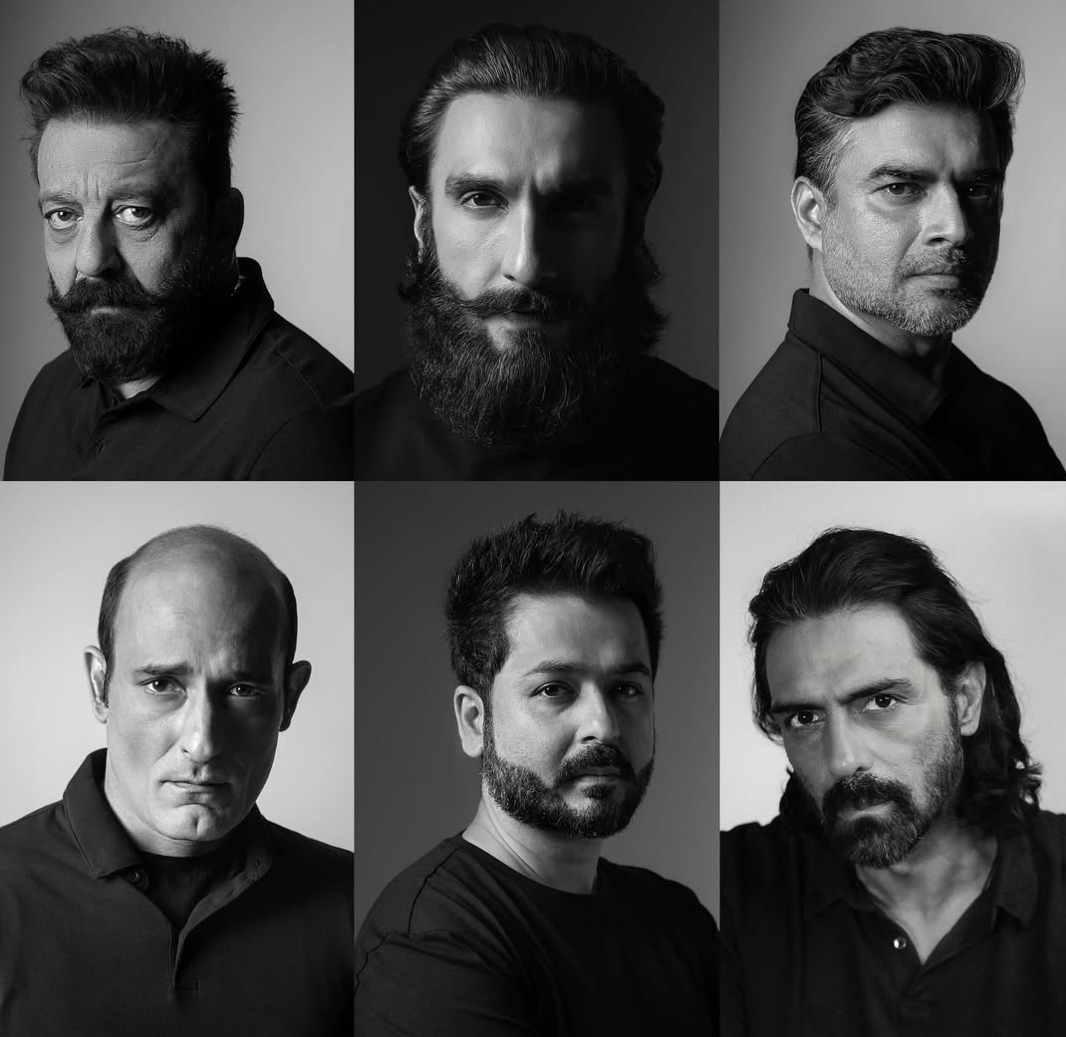
With Dhurandhar, director Aditya Dhar clearly knows which nerve he’s pressing. His treatment of the subject, and more importantly the sheer ambition of its scope, is mesmerizing. The film weaves together nearly three decades of geopolitical history—terror attacks, intelligence operations, mafia-state collusion—into a single narrative spine, and remarkably, it holds.
This is not unfamiliar territory for Hindi cinema. Over the past twenty years, films have tackled 26/11, Kargil, Uri (also Dhar), and various Pakistan-based terror plots. Most of those films leaned heavily into jingoism, designed to ignite patriotic fervor and applause in packed theaters. Dhurandhar takes a very different route.
From the opening frame, it feels less like a conventional thriller and more like an enhanced documentary—stylized, dramatized, but grounded. And it sustains that tone for 214 minutes. That’s three and a half hours. No intermission padding. No pointless songs. No tonal whiplash. Just relentless forward motion.
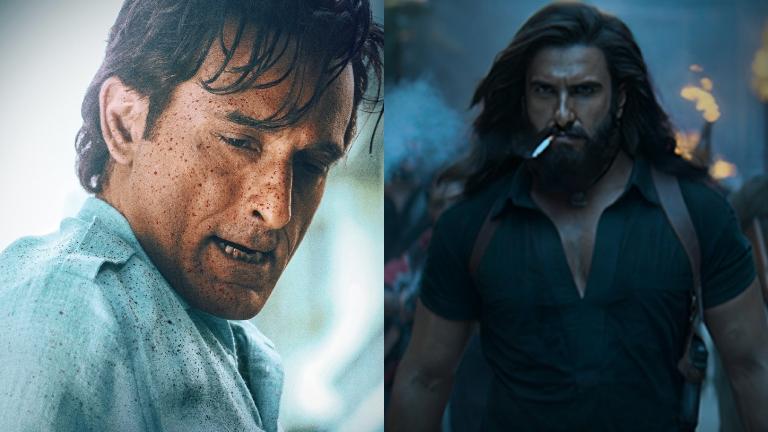
The casting has been widely praised, and rightly so. Ranveer Singh completely inhabits Hamza Ali Mazari in the way Atul Kulkarni once disappeared into Natrang. There are no heroic flourishes here. He commands the screen quietly, often from the margins, observing, calculating. The one moment where he slightly overreaches is during the 26/11 sequence—watching the carnage unfold on TV in the presence of the Pakistani mafia and ISI architects behind it. The suppressed rage, tears, and frustration are effective, but a shade less restraint would have been more in keeping with his characterization till then.
Still, it’s a minor blemish. His confidence, technical mastery, and subtly manipulative demeanor more than compensate. Hamza Ali is always ten steps ahead, and Ranveer sells that completely.
Until Rehman Dakait walks in.
Akshaye Khanna is finally getting the mainstream recognition he has quietly deserved for decades. From Dil Chahta Hai onward, he’s carved out a distinct oeuvre, never chasing stardom, always chasing craft. But as Rehman Dakait, he pulls out all the stops.
The immaculate suits. The languid smoking. That unnerving half-smile. He embodies the kind of evil that doesn’t raise its voice. His dialogue delivery—measured, deliberate—inevitably brings to mind Gabbar Singh. Not in volume or theatrics, but in menace. The madness is contained. There’s a moral code, however warped. And that combination makes him terrifying.
Arjun Rampal, as ISI Major Iqbal—clearly inspired by Ilyas Kashmiri—feels like a missed opportunity. Rampal has the physical presence and menace for the role, but the performance never quite settles in. The makeup and styling feel a bit too staged, almost like he hasn’t fully inhabited the skin of the character, and there’s a slight discomfort in how he carries himself, as if the clothes are wearing him rather than the other way around. More importantly, the dialogue written for him leans heavily into overt villain-speak—grand, declarative, and self-consciously evil—where a quieter, more grounded approach would have made the character far more unsettling.
Sanjay Dutt is Sanjay Dutt—bringing with him the accumulated weight of his screen persona. His character, SP Chaudhary Aslam, feels like a composite of roles he has played before, (think Khalnayak, Agneepath, even Munna Bhai) but it works within the ecosystem of the film. In a film that otherwise thrives on restraint, this one note of excess stands out.
The supporting cast is uniformly strong. Rakesh Bedi, in particular, commands attention. One of the smartest actors of his generation, Bedi has long been boxed into comedy—from TV in the ’80s to cameo roles in Bollywood masala films. As the oily politician Jameel Jamali, he is superb. Every scene lands. His immersion is so complete that you genuinely forget this is Omi from Chashme Buddoor.
And then there’s Madhavan.
From his very first appearance—standing outside the hijacked Air India flight at Kandahar—he commands the frame with quiet authority. No theatrics, no chest-thumping. Like the principal of my old Jesuit school, he exerts control simply by being present.
Portraying Ajit Doval, India’s current National Security Advisor, Madhavan captures conviction, frustration, and long-game patience with remarkable restraint. There’s even a moment where he breaks the fourth wall—brief, unexpected—and delivers a line that echoes at the film’s end and has since become meme material. Earned, not gimmicky.
The women in Dhurandhar are written true to the period it depicts. The romantic subplot never feels shoehorned, and faintly recalls the grounded intimacy of Gully Boy. Sara Arjun is lively and disarming as a young woman navigating a conservative, deeply duplicitous Pakistani society. Saumya Tandon, as Rehman’s wife, makes a strong impression despite limited screen time.
Narratively, the film moves along a single, continuous thread—unraveling the deep nexus between the Pakistani mafia and the ISI in fomenting terror against India. The action is stylized but controlled. Think Rohit Shetty, but with the volume dialed down. One standout sequence has Hamza crashing a car into a fire hydrant, sending a goon flying through the windshield in a beautifully staged slow-motion shatter. The confrontations are predictable, yes—but satisfying.
The music has taken on a life of its own online, especially the character-introduction tracks. The song accompanying Rehman’s visit to his village is particularly effective. Fa9La by Bahraini rapper Flipperachi is already iconic, much like Jamal Kudu was for Bobby Deol in Animal.
The lone item number, Shararat, is deliberately kitschy—appropriate, given it’s staged as entertainment at a Pakistani wedding.
The denouement of Part 1—yes, there is a Part 2—leans into cinematic license. Hamza marrying the politician’s daughter to establish “family” control over Lyari, and by extension Karachi, feels slightly fantastical given the realism the film otherwise maintains. I understand why it’s necessary. It just stretches credibility a bit.
The film doesn’t end on a cliffhanger so much as a promise. Revenge is coming. Part 2 lands in March 2026.
I walked out of the theater without quite realizing that nearly four hours had passed. That alone is saying something. I’ll almost certainly watch it again. It may never achieve the mythic status of Sholay, but it comfortably sits in the same conversation as Dil Chahta Hai—a film that quietly redefined what mainstream Hindi cinema could be.
And that, in today’s cinematic landscape, is no small achievement.
 Gautam's Gyan...